Wednesday, November 28, 2012

Greetings

When you meet someone for the first time, you will say 'Hi! Nice to meet you!"

In Korea, you can say 안녕하세요(Annyeonghaseyo) or 안녕(Annyeong) for "Hi."

In Korea, we use two forms when we are talking.
When you are talking to older people and someone not familiar to you or just you want to respect the person, you use 'High Form.'
When you are talking to your friends and younger people or someone who are very close to you(even though they are older...like your mom, dad, brother, sister, or some older friends), you use 'Low Form.'
Some parents strictly make their children to use 'High Form' to them. It sounds more respectful.

안녕하세요(Annyeonghaseyo) is High Form.
안녕(Annyeong) is Low Form.


And then you might want to say "만나서 반갑습니다(Mannaseo Bangapseumnida)." or  "만나서 반가워요(Mannaseo Bangawuoyo)."
It is "Nice to meet you." in Korean.


When you know the person and meet her or him, you can say "How are you doing?"
In Korean, it is "어떻게 지내세요?(Eoteoke jineseyo)"


Then, the answer may be "I am doing fine." 
In Korean, it is "잘 지내요(Jal jineyo)." or "잘 지내고 있어요(Jal jinego iseoyo)."


Thursday, November 22, 2012

Korean people use N-word all the time?

One day, I was hanging out with my friends.
My cell phone rang, and I picked up. I started talking in Korean.
After I was done, my friends were like...'OMG, did you just say the 'N-word' over and over again?

I used it so many times that they couldn't miss it.

Well... Let me tell ya.

I didn't use the 'N-word.' The word in Korean just sounds similar to it.

There are two.
내가 and 니가
내가(Nega) means 'I' when you are emphasizing 'I' in the sentence. 
니가(Niga) means 'YOU' when you are emphasizing 'You' in the sentence.

Well.. so... when I told them that, they all laughed.


If you don't know that, you might get offended.

There was one black guy who went to Korea and thought that some old man call him 'nigga' and assulted the old man. It is really bad.

If you want to check the video out, this is the video.
It is a really sad video...

Let's learn at least some basic language before you visit the country.

Slang related to 'Appearance.' - 간지난다

간지난다(Ganjinanda) is similar to 멋있다(Meosita). While 멋있다 is 'looking good,' 간지난다 means 'fashionable' and 'looking good with nice clothes' with fierceness and edge.

간지 is actually from 'Kanji' from Japanese. It is 'feeling' or 'vibe.'
So, if you translate 간지난다, it will be 'giving off good vibes.'

So, 간지난다 is 'fashionable' and 'looking good.(This doesn't means handsome. It should be more of fashionably looking good.)' and giving off fierce and edge vibes.

Gosh... He is just 간지 himself.
We call him 소간지(Soganji) since his lastname is So.
He is Bi Rain. We call him 비간지(Biganji).

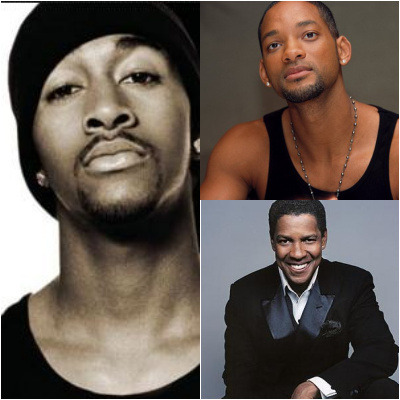
Many Koreans also say Blacks are 간지난다.
We say 흑인간지(Heuginganji).


My hubby, James has some 간지, right? lol.
 
For some men readers, I need to put some women pictures.
 
I think the woman who has the most 간지 might be Rihanna.
Look at her. She is just 간지. I might need to call her '리간지(Riganji).' lol.


Wow. Wow. I like her. hee hee.
 
And... maybe another might be Blake Lively.
She is Serena in Gossip Girl.
She has real 간지.

She is only wearing this school uniform, and she just looks great!
 
 
Anyway, who else has 간지 for you guys? :)


Monday, November 19, 2012

Slang related to 'Face' 쌩얼

쌩얼(Sseng-eol) is a face without any make-up.
쌩(Sseng) is a strong versions of 생(seng). 생 means 'raw.'
얼(eol) is the first letter from 얼굴(face).
Many Korean celebrities post their 쌩얼 pictures so that they show off their face without any make-up.


But the funny thing is most their 쌩얼 face is not just make-up free. They do their 쌩얼 make-up by applying some BB cream and very light lip gloss and etc. etc.
So... if someone says her face is 쌩얼 today, don't believe her 100% because she might have done some 쌩얼 makeup. :P

Idioms related to 'Face' (2) 얼굴이 피다

얼굴이 피다.(Eolguri pida.)
얼굴 is face, and 피다 means 'to bloom.'
So if you translate it directly, it will be 'a face is blooming.'
Obviously, a face can't bloom.
Can it? Maybe.. lol

So if someone says, 너 얼굴이 폈다(Neo eolguri pieota). That means you look happier and brighter.

Example: 너 요즘 좋은일 있니? 얼굴이 폈다. (Do you have anything good happening? You look brighter.

Sunday, November 18, 2012

Idioms related to 'Face' (1) 낯 뜨겁다.


1. 낯 뜨겁다 (Nat Teugeobda)

낯 is Face. 뜨겁다 means 'hot.'

When your face turns hot, that means your face turns red and you are embarrassed or shy(blushing).

For example, if someone keeps pointing out your weaknesses, you will say "낯 뜨겁다".
When you see a couple displaying their affection too much in public, you will feel shy and wouldn't like it. 
Then you can say "낯 뜨겁다."


Hey! What are you guys doing???? I am shy. I am blushing.


These are really 낯 뜨거운(When you are using it for an adjective, you use 'Nat Teugeoun)) moments.


Tuesday, November 13, 2012

Konglish words? How can I pronounce them?

Since Korean letters don't have certain sounds that English has, we write some sounds in Korean letters which sound similar to the english letters.

 Korean language does not have 'f' 'v' 'th'(in Thanks) 'th'(in Mother) 'l' 'r' 'z' sounds.
 For 'l' 'r' sounds, we have very similar 'r' sound, but if you listen carefully, it is not really either 'l' or 'r.'

When you hear 'ra' in Camera, it is not 'l' or 'r'. You have to pronounce it placing your tip of the tongue right in the middle of the mouth ceiling.

Check this how 'orange' sounds.


That is how you should pronounce Korean 'r.'

As you just notice from the sound 'orange,' we always finish any words with either vowel or 'm' 'n' 'p' 'b' 'ng' 't'. If the ending sound is 'g' like Orange, you need to put a vowel to complete the word. We put 'i.'

Since we don't have 'v' sound, we change it to 'b' sound.

This one, too. Not video, it is bidio. :)

Since we don't have 'f' sound we change it to 'p' sound.

Kiss finishes with 's' sound which is not allowed to end with in Korean language, so we put 'eu' sound at the end.
This one, too. not just 't' you have to say 'teu.'

We don't have 'z' sound. so we just use 'j' sound.

For 'th' in thanks, we use 's' sound, and for 'th' in mother, we use 'd' sound.

Now, if you hear any Konglish words, you will be able to understand them! Yay!! :)